7 Kinds of Water Technology for Finding Leaks
Nanalyze covers seven types of water technology for detecting leaks and infrastructure problems, featuring SewerAI as the computer vision solution for sewer assessment alongside satellite, acoustic, IoT, and robotic approaches.
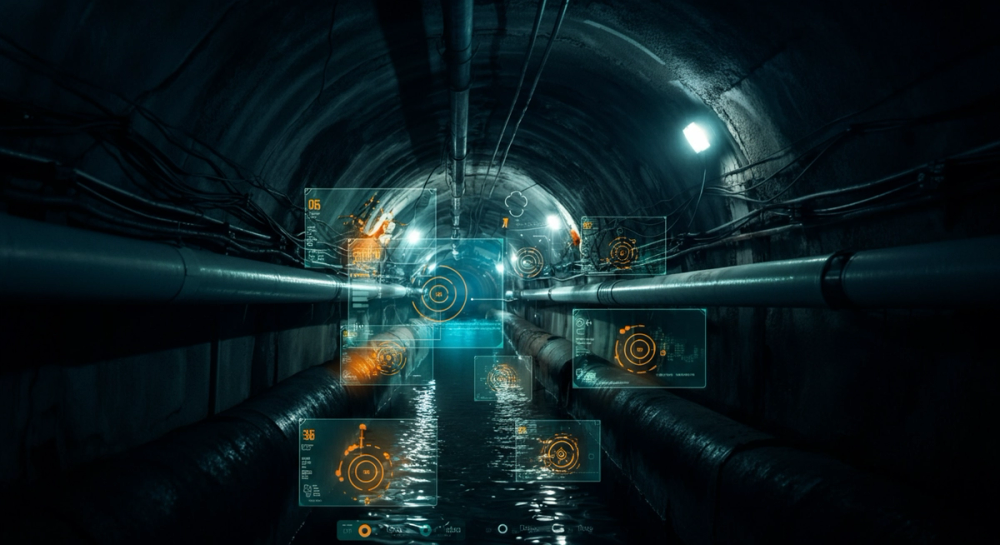
Water infrastructure is in crisis — and most of it is happening underground, out of sight. In the United States alone, leaky water lines cost the government upwards of $2.8 billion annually, while an estimated seven billion gallons of water are stolen from US water systems every single day through deteriorating pipes. The scale of the problem is staggering, and the urgency to find smarter, faster, and more accurate solutions has never been greater.
Nanalyze recently published a roundup of seven innovative companies tackling this challenge from different angles — from satellites orbiting the Earth to robots crawling through sewers. SewerAI is proud to be featured among these pioneering water technology companies. Here's a look at all seven approaches and why this moment matters for the future of water infrastructure.
The Scale of the Water Leak Problem
America's water infrastructure is aging rapidly. Pipes installed decades — sometimes over a century — ago are failing at an accelerating rate. The consequences go beyond wasted water: crumbling infrastructure threatens public health, strains municipal budgets, and contributes to environmental damage. With climate pressures intensifying and populations growing, the window to modernize is narrowing.
The good news is that a new generation of technology companies is stepping up with solutions that are faster, more accurate, and more cost-effective than traditional inspection methods. Nanalyze's February 2021 roundup highlights seven distinct approaches — each targeting a different part of the water infrastructure challenge.
7 Types of Water Technology for Finding Leaks
1. Satellites — Utilis
Utilis uses Synthetic Aperture Radar (SAR) satellite imagery to detect underground water leaks without ever touching the ground. By analyzing how moisture anomalies appear in satellite data, the platform can pinpoint where pipes are leaking beneath streets and soil. Since 2016, Utilis claims its technology has helped save more than 5 billion gallons of potable water — a remarkable achievement that demonstrates the power of remote sensing applied to infrastructure.
2. Robot Inspection — Fluid Robotics
Fluid Robotics takes a hands-on approach — literally sending robots into pipes to physically inspect for defects. These robotic systems crawl through water and sewer lines, capturing detailed imagery and data about pipe conditions. While robotic inspection has been around for some time, advances in robotics and sensor technology are making these systems more capable and cost-effective than ever before.
3. Computer Vision for Sewers — SewerAI
This is where SewerAI comes in — and it's a section worth reading closely.
Founded in 2019 and headquartered in San Francisco, SewerAI has raised $2 million in disclosed funding from a Seed round completed in August 2020. The company has built a computer vision platform called AutoCode that autonomously assesses defects in sewer infrastructure from video footage — transforming a slow, labor-intensive process into a fast, accurate, and scalable one.
Here's the problem AutoCode solves: today, robots are used to crawl through sewers and capture video of the pipe interior. But once that footage is collected, a human inspector must watch every single second of it in real time — every dull, repetitive foot of pipe — and manually log any defects they observe. It's an extraordinarily time-consuming process, and one that's prone to human error and inconsistency.
AutoCode changes that equation entirely. The platform watches the video autonomously, identifies defects, and generates inspection reports — dramatically reducing the burden on human reviewers. SewerAI's system is particularly adept at detecting what are known as cross bores: unintended intersections of utility lines that can compromise the structural integrity of one or both lines involved. Cross bores are a serious safety hazard, and catching them early is critical.
The results speak for themselves. SewerAI claims its solution can:
- Improve inspection accuracy by 20%
- Save 40% of time spent in the field
- Save 70% of time spent in the office on post-inspection review
Those are significant efficiency gains for municipalities and utilities that are often operating with constrained budgets and limited inspection crews. By automating the most tedious and error-prone part of the sewer inspection workflow, SewerAI enables teams to cover more ground, catch more problems, and respond faster.
4. Acoustic Leak Detection — Aquarius Spectrum
Aquarius Spectrum uses acoustic technology to listen for the telltale sounds of water escaping from pressurized pipes. By deploying sensors that detect and analyze sound waves traveling through pipe networks, the platform can identify leak locations with precision — without requiring excavation or physical inspection. Acoustic detection is one of the most established non-invasive leak detection methods, and modern AI is making it significantly more accurate.
5. AI and IoT for Stormwater — StormSensor
StormSensor focuses on a different but equally important part of the water infrastructure puzzle: stormwater management. The company deploys IoT sensors throughout stormwater and sewer networks to monitor flow, depth, and water quality in real time. Combined with AI-driven analytics, this data helps cities understand how their stormwater systems are performing, predict overflow events, and prioritize maintenance before problems escalate.
6. Satellites and AI for Flood Detection — Cloud to Street
Cloud to Street combines satellite imagery with artificial intelligence to map and monitor flooding events in near real time. The platform helps governments, insurers, and humanitarian organizations understand the extent of flood damage, track how floods evolve, and build better predictive models for future events. As climate change drives more frequent and severe flooding, tools like Cloud to Street become increasingly essential for resilience planning.
7. Smart Water Management for Buildings — AquaSeca
AquaSeca brings water intelligence inside the building. The company's smart water management platform monitors water usage and detects leaks within commercial and residential properties, helping building owners and managers catch problems early — before a small drip becomes a costly flood. By connecting building-level water data to actionable alerts, AquaSeca addresses the portion of water loss that happens not in municipal pipes, but in the buildings they serve.
Why This Roundup Matters
What's striking about Nanalyze's roundup is the diversity of approaches. There is no single silver bullet for water infrastructure — the problem is too large, too varied, and too distributed for any one technology to solve alone. Satellites can find leaks across entire cities. Robots can crawl into pipes that humans can't reach. Computer vision can process inspection footage faster and more accurately than any human reviewer. Acoustic sensors can listen for leaks in pressurized mains. IoT networks can monitor stormwater systems continuously. Each approach addresses a different layer of the challenge.
For SewerAI, being included in this roundup reflects the growing recognition that computer vision and AI have a critical role to play in modernizing sewer inspection. The status quo — human reviewers watching hours of pipe footage — is simply not sustainable at the scale the problem demands. AutoCode offers a path to faster, more consistent, and more accurate assessments that can help utilities and municipalities get ahead of infrastructure failures rather than reacting to them.
STAY AHEAD OF THE FLOW
Get SewerAI updates, product news, and practical guidance for modern sewer inspection programs.