7 reasons your sewer inspection data doesn't line up (and how to fix each)
Most teams discover their data is inconsistent at the worst possible moment. Inspection data drifts for specific, predictable reasons — here are the seven we see most often, and what actually fixes each one.
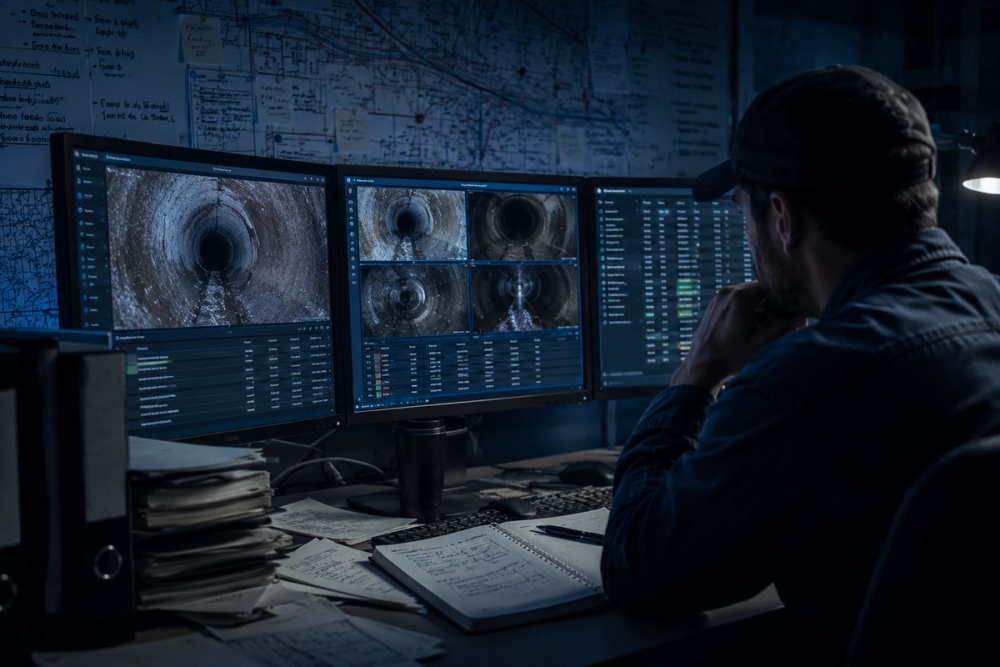
Most teams discover their data is inconsistent at the worst possible moment: in front of a board, an auditor, or a consultant who just questioned a number. The data was collected by good people using real tools, and it still doesn't reconcile. That's not bad luck. Inspection data drifts for specific, predictable reasons, and once you can name them, you can close most of the gaps.
Here are the seven we see most often, and what actually fixes each one.
1. Crews apply the standard differently
PACP is a shared language, but it's still interpreted. Two certified inspectors can code the same defect differently on the edge cases, and real pipe is mostly edge cases. The fix isn't more training memos. It's establishing one consistent coding baseline, ideally automated, so the standard is applied the same way on every foot, with humans focused on the genuine judgment calls.
2. Pipe IDs and metadata don't match across systems
The inspection says one asset ID. The GIS says another. The work order says a third. When the keys don't line up, you can't join the data later, and every report starts with someone reconciling spreadsheets by hand. The fix is to capture the right identifiers and metadata at the point of inspection, tied to your asset register, instead of cleaning it up after the fact.
3. Every project lives in its own format
Different vendors, different software, different exports. Each project is fine on its own, but the moment you want a system-wide view, you're stitching together incompatible files. The fix is a single environment where every inspection lands in the same structure, so the hundredth project is queryable alongside the first.
4. QA is a sample, not a sweep
Manual review re-checks a percentage of footage because checking all of it by hand isn't realistic. The rest is never independently verified, and that's where quiet inconsistencies live. The fix is QA that can actually cover everything, which only works when the consistent first pass is automated and humans review the flagged exceptions rather than a random sample.
5. Footage quality varies more than people admit
Uncleaned pipe, poor lighting, a camera moving too fast: the same defect looks different under different field conditions, and the coding follows. The fix is partly field discipline (cleaning and pace standards) and partly a review process that surfaces low-confidence footage so it gets a second look before it becomes a data point.
6. Context gets lost in the handoffs
Field crew to office reviewer to engineer to planner. Each handoff drops a little context, and by the time the data reaches the person making the funding decision, the "why" behind a code is gone. The fix is keeping the inspection, the coding, and the decision in one connected record, so the planner can trace any number back to the footage it came from.
7. There's no single source of truth
Three versions of the priority list, two spreadsheets, and an email thread. When the data lives in many places, the "real" number is whoever spoke last. The fix is one record everyone works from, updated as new inspections come in, so the system you're looking at is the system as it is now, not as it was at the last study.
The pattern underneath all seven
Notice what these have in common. None of them is a story about people not caring. They're all symptoms of inspection data being collected in pieces, by hand, in disconnected places. Pioneer exists to close most of them at once, by putting the whole program — field to coded data to a single queryable record — in one environment. The inconsistencies that took a junior engineer a week to reconcile mostly stop being created in the first place.
The crews, contractors, and engineers were never the weak link. The weak link was asking connected work to happen across disconnected tools. Fix that, and the data finally lines up on its own.
Want to see where your data is drifting? A quick walkthrough will show how a single connected record removes most of these gaps before they start.

STAY AHEAD OF THE FLOW
Get SewerAI updates, product news, and practical guidance for modern sewer inspection programs.