Artificial Intelligence Speeds Houston's Sewer Inspections Under Sharp Eye of EPA
Underground Construction magazine covers how SewerAI is helping the City of Houston — the nation's largest sewer collection utility — use AI to comply with a major US EPA Consent Decree and dramatically increase inspection efficiency.
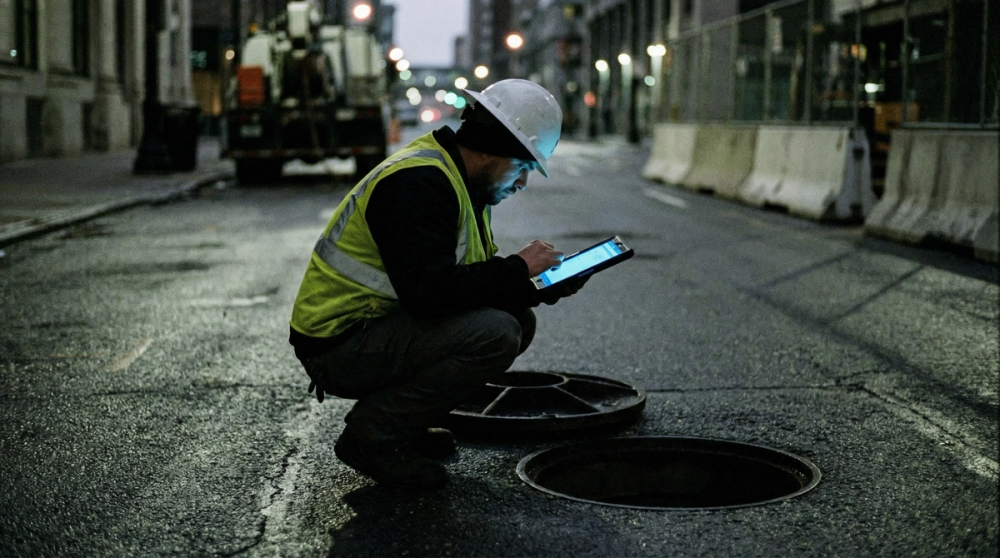
This article originally appeared in Underground Construction magazine, October 2022 (Vol. 77, No. 10), written by Jeff Awalt. Read the full article here.
The Nation's Largest Sewer Utility Faces a High-Stakes Compliance Challenge
The City of Houston operates the largest sewer collection system in the United States — a sprawling network of pipes, lift stations, and infrastructure serving millions of residents across one of America's fastest-growing metropolitan areas. Managing a system of that scale is a formidable challenge under any circumstances. But Houston Water has been operating under an additional layer of pressure: a formal US Environmental Protection Agency (EPA) Consent Decree requiring the city to systematically inspect, assess, and rehabilitate its sewer infrastructure on an aggressive timeline.
Consent Decrees of this kind are legally binding agreements between municipalities and the EPA, typically issued in response to documented violations of the Clean Water Act — such as sanitary sewer overflows (SSOs) that discharge untreated sewage into waterways or onto public property. Meeting the terms of a Consent Decree demands rigorous documentation, accelerated inspection schedules, and a level of data throughput that can quickly overwhelm traditional manual workflows.
To meet these demands, Houston Water turned to SewerAI.
Automating CCTV Inspection Review with AutoCode AI
At the heart of SewerAI's solution is AutoCode, a proprietary computer vision platform purpose-built for the analysis of closed-circuit television (CCTV) sewer inspection footage. Traditional CCTV inspection workflows require trained technicians to watch hours of pipe footage frame by frame, manually identifying and coding defects according to standardized rating systems such as NASSCO's Pipeline Assessment Certification Program (PACP). It is painstaking, time-consuming work — and at the scale Houston Water operates, it creates a significant bottleneck between field data collection and actionable results.
AutoCode replaces that manual review process with AI-driven analysis. The platform ingests raw CCTV video footage from inspection crews in the field, then applies deep learning computer vision models to automatically detect, classify, and code pipe defects — cracks, fractures, root intrusions, joint offsets, corrosion, and more — at a speed and consistency that no human reviewer can match. The resulting coded inspection reports are delivered to Houston Water's engineering team ready for review, dramatically compressing the time between inspection and decision-making.
The AI models underlying AutoCode have been trained on millions of feet of real-world sewer inspection footage, enabling them to recognize a wide range of defect types across varying pipe materials, diameters, and conditions. The system is designed to meet or exceed the accuracy of experienced human coders while processing footage at a fraction of the time.
Efficiency Gains That Matter
The impact of deploying AutoCode at Houston Water has been tangible and significant. Fazle Rabbi, a Managing Engineer at Houston Water, put it plainly in the Underground Construction article:
"Using this (artificial intelligence) technology definitely has increased the efficiency of our inspection process, which used to be done manually."
That efficiency gain is not merely a convenience — it is a compliance necessity. Under the terms of Houston's EPA Consent Decree, the city must inspect thousands of miles of sewer pipe on a defined schedule. Delays in processing inspection data translate directly into delays in identifying problem areas, prioritizing rehabilitation work, and demonstrating progress to regulators. By automating the coding and review process, SewerAI enables Houston Water to keep pace with its field inspection crews and maintain the data throughput required to stay on track with its Consent Decree obligations.
Beyond raw speed, automation also brings consistency. Manual coding is inherently subject to variability between individual reviewers — different technicians may code the same defect differently, introducing noise into the data that can complicate asset management decisions. AutoCode applies the same trained models to every foot of footage, producing standardized, repeatable results that hold up to regulatory scrutiny.
A Deployment That Sets a New Benchmark
The scale of SewerAI's deployment with Houston Water is notable in its own right. As the nation's largest sewer collection utility, Houston represents one of the most demanding operational environments in the water sector. Successfully deploying AI-driven inspection analysis at this scale — under the scrutiny of an active EPA Consent Decree — demonstrates that the technology is ready for prime time in even the most complex, high-stakes municipal environments.
For other utilities facing similar compliance pressures, the Houston deployment offers a compelling proof point. EPA Consent Decrees are increasingly common as regulators intensify enforcement of Clean Water Act requirements, and the inspection data backlogs they create are a widespread challenge. AI-powered tools like AutoCode offer a path to closing those backlogs faster and more cost-effectively than traditional approaches — without sacrificing the data quality that regulators demand.
The Broader Significance for the Water Sector
The Houston Water story is part of a broader shift underway in the water and wastewater industry. Utilities across the country are grappling with aging infrastructure, tightening regulatory requirements, and workforce constraints that make traditional manual inspection workflows increasingly unsustainable. AI and computer vision technologies are emerging as a critical tool for bridging the gap — enabling utilities to do more with the resources they have while generating higher-quality data to guide long-term capital planning.
SewerAI's work with Houston Water illustrates what that future looks like in practice: AI working alongside field crews and engineering teams to accelerate the inspection pipeline, improve data consistency, and ultimately help utilities protect public health and the environment more effectively.
Read the full article in Underground Construction magazine: "Artificial Intelligence Speeds Houston's Sewer Inspections Under Sharp Eye of EPA" (Vol. 77, No. 10, October 2022).
STAY AHEAD OF THE FLOW
Get SewerAI updates, product news, and practical guidance for modern sewer inspection programs.