Engage the Defect Radar! Space Age AI Technology in Our Underground Sewer Networks
Water Finance & Management publishes Greg Baird's deep dive into how AI computer vision technology — including SewerAI — is transforming sewer condition assessment, workforce development, and asset management for municipal utilities.
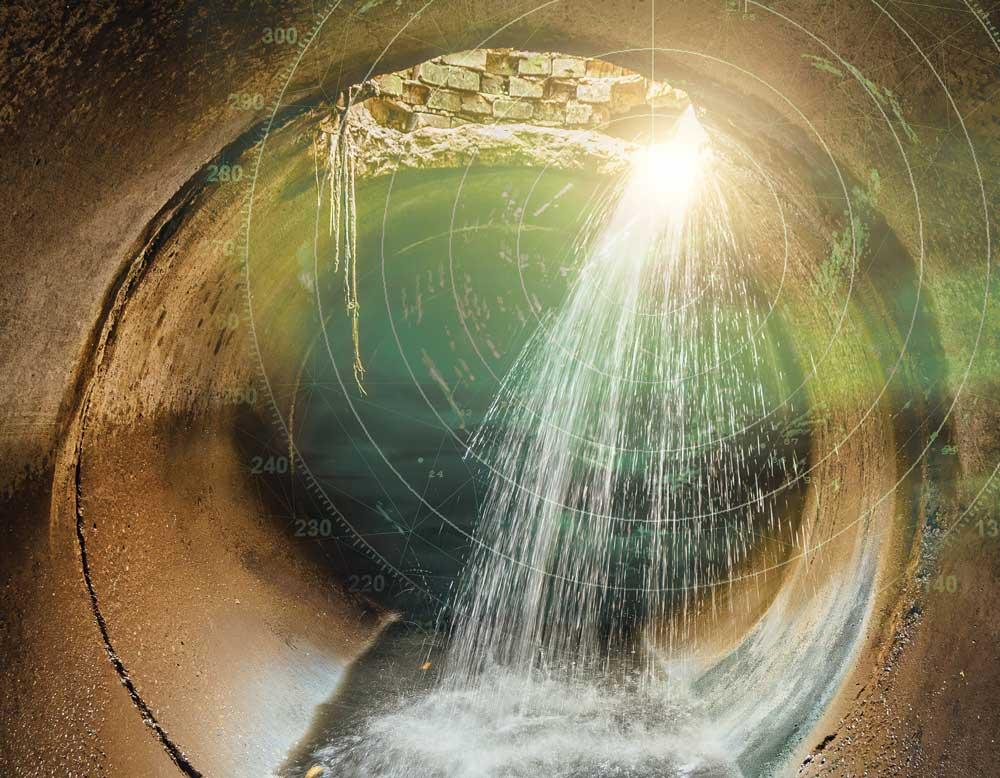
In the 1998 blockbuster Armageddon, space shuttle pilots rely on FOD (foreign object debris) radar to automatically identify and code incoming debris hurtling toward Earth. It's a vivid piece of science fiction — but the underlying concept, using intelligent systems to detect, classify, and respond to threats in real time, is no longer confined to the movies. Today, that same spirit of automated detection is being applied deep underground, inside the aging sewer networks that serve communities across the United States.
Writing in the April 2021 print issue of Water Finance & Management, Greg Baird, President of the Water Finance Research Foundation, explores how AI-powered computer vision technology — including SewerAI — is fundamentally transforming the way municipal utilities assess, manage, and maintain their sewer collection systems.
What Is Computer Vision?
Computer vision is the branch of artificial intelligence that enables machines to gain a high-level understanding of objects and conditions from digital images or video. In the context of sewer infrastructure, this means applying AI to the CCTV footage collected during pipeline inspections — footage that has historically required trained human operators to review, code, and report on, frame by frame.
Software engineers use machine learning to train algorithms that learn for themselves how to fulfill a specific objective. In sewer inspection, that objective is identifying defects and structural features inside pipes — cracks, root intrusions, joint offsets, deposits, and more — with speed and accuracy that surpasses manual review.
The Scale of the Challenge: America's Sewer Network
The scope of the problem is enormous. The United States is home to more than 800,000 miles of public sewers and an additional 500,000 miles of private laterals. Keeping this vast underground network functioning requires a rigorous maintenance regimen, including:
- Annual CCTV inspection of pipeline assets
- Annual cleaning programs
- Monthly sand and grease interceptor inspections
- Root cutting for service connections
Operator-assisted sewer AI empowers utilities to move beyond reactive maintenance. With AI-generated condition data in hand, operators can focus their expertise on higher-value decisions: determining the type and frequency of cleanings, timing and location of point repairs, assessing the need for additional condition assessment or remaining useful life (RUL) analysis, evaluating lining and other trenchless rehabilitation technologies, and developing long-range capital replacement plans.
AI Supports Workforce Retention and Training
A common concern when AI enters any industry is the fear of job displacement. In the sewer sector, Baird is clear: AI does not replace the operator, nor does it eliminate the need for professional certification. Instead, it acts as a powerful force multiplier.
Computer vision software automatically recognizes defects and features in pipes and assists in generating condition assessment reports at approximately four times the speed of manual review, with accuracy rates ranging from 95 to 100 percent and a higher degree of consistency across reviewers. This means new recruits can be trained faster and more effectively, while experienced operators are freed from repetitive coding tasks to apply their skills to more meaningful, value-added work.
In an industry facing significant workforce shortages and an aging expert base, this is not a minor benefit — it's a strategic advantage.
Pipe Condition Assessment Standardization: NASSCO PACP
Underpinning all of this is a critical industry standard: NASSCO's Pipeline Assessment Certification Program (PACP), the North American standard for pipeline defect identification and assessment. PACP defines 226 distinct condition codes, providing a common language for utilities, contractors, and software platforms alike.
AI systems trained on PACP codes can apply this standardized framework consistently at scale — something that is extremely difficult to achieve with manual review alone, where individual operator interpretation can introduce variability into condition data.
PACP-Based Asset Management: The Pyramid Approach
Baird describes a sewer network condition assessment and asset management pyramid, with human-assisted computer vision — AI and machine learning applied to CCTV data — sitting at the top. This low-cost AI approach to coding the condition of each sewer pipe forms the foundation for smarter, data-driven decision-making across the entire asset lifecycle.
With reliable, standardized condition data, utilities can allocate resources for maintenance work orders and asset management activities with precision — shifting from a reactive, high-cost operational mode to a planned and predictive, lower-cost strategic posture. This transformation is especially impactful in three critical areas:
- Compliance mitigation strategies for consent decrees
- Management and reduction of sanitary sewer overflows (SSOs)
- Reduction of Inflow and Infiltration (I&I), which can account for as much as 45 percent of increased flows to the treatment plant
Each of these challenges carries significant financial, regulatory, and environmental consequences. AI-driven condition assessment gives utilities the data they need to address them proactively.
Sustainability, Resilience, and the Triple Bottom Line
Sewer condition assessment and asset management doesn't exist in isolation — it integrates directly with the broader sustainability goals of modern utilities. Baird frames this through the lens of a triple bottom line (TBL) approach, which evaluates decisions across social, environmental, and economic dimensions simultaneously.
By building a more complete and accurate picture of underground infrastructure health, AI-powered assessment programs help utilities build genuine resilience into their sewer networks — from day-to-day risk mitigation to recovery from climate events or man-made disruptions. A utility that knows the condition of its pipes is a utility that can respond, adapt, and plan with confidence.
The Future Is Already Underground
The parallels to Armageddon's FOD radar are more than metaphorical. Just as those fictional pilots relied on intelligent systems to detect threats they couldn't see with the naked eye, today's sewer operators are leveraging AI to identify defects hidden inside hundreds of thousands of miles of underground pipe — faster, more accurately, and more consistently than ever before.
SewerAI is proud to be part of this transformation. Read the full article by Greg Baird in Water Finance & Management at waterfm.com.
STAY AHEAD OF THE FLOW
Get SewerAI updates, product news, and practical guidance for modern sewer inspection programs.