PACP Data Drives AI-Based Innovation to Optimize Rehab & Asset Planning in Trenchless Technology
SewerAI's Eric Sullivan writes for Trenchless Technology magazine on how PACP data is driving AI-based innovation to optimize rehabilitation and asset planning, addressing one of the industry's most important challenges.
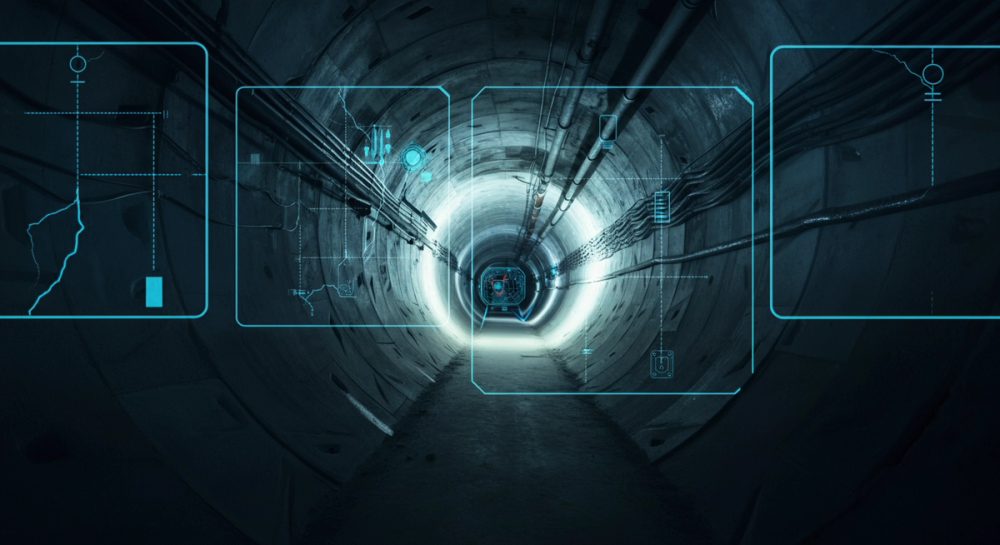
This article was originally published in Trenchless Technology magazine (May 2022) by Eric Sullivan of SewerAI.
Gaining useful insights from the massive amounts of both archival and recently collected sewer data, and doing this as cost-effectively as possible, is one of the most important challenges our industry faces.
The water and wastewater industry sits on a goldmine of data. Decades of closed-circuit television (CCTV) inspection footage and condition assessment records have been accumulated by utilities across North America — yet for many organizations, that data remains largely untapped. Turning this wealth of information into actionable intelligence for rehabilitation planning and long-term asset management is now one of the defining challenges of the trenchless technology sector.
The Foundation: NASSCO PACP as the Industry Standard
At the heart of sewer condition assessment in North America is the NASSCO Pipeline Assessment Certification Program — better known as PACP. As the industry-standard framework for identifying, coding, and scoring pipeline defects, PACP provides a consistent, structured language for describing the condition of sewer infrastructure. Alongside PACP, the LACP (Lateral Assessment Certification Program) and MACP (Manhole Assessment Certification Program) extend this standardized approach to lateral connections and manholes, respectively.
Because PACP data is structured and standardized, it is uniquely well-suited for computational analysis. Every defect observation — from cracks and root intrusions to joint offsets and infiltration — is assigned a specific code and severity score. This consistency across thousands of inspections and millions of feet of pipe creates a rich, machine-readable dataset that, when properly harnessed, can power sophisticated analytics and artificial intelligence applications.
AI-Powered Condition Assessment: AutoCode and Computer Vision
One of the most significant recent advances in the field is the application of AI-driven computer vision to CCTV inspection footage. SewerAI's AutoCode technology uses deep learning models trained on vast libraries of sewer inspection video to automatically identify and code defects in accordance with NASSCO PACP, LACP, and MACP standards.
Rather than relying solely on manual review — a time-consuming and inherently variable process — AutoCode processes inspection footage and generates compliant condition assessment deliverables automatically. This dramatically reduces the time and cost associated with coding inspections while improving consistency and throughput. Utilities and engineering firms can now process backlogs of archival footage that might otherwise sit unreviewed for years, unlocking the value embedded in data that was previously too expensive to analyze.
The result is a continuous, scalable pipeline from raw CCTV footage to structured, standards-compliant PACP data — ready for the next stage of analysis.
From Data to Decisions: AI Analytics for Rehab Planning
Generating PACP data is only the first step. The real value lies in what can be done with it. AI-based analytics applied to large PACP datasets enable engineers and asset managers to move beyond reactive, break-fix maintenance toward proactive, risk-informed asset management.
Key applications include:
- Rehabilitation prioritization: AI models can analyze defect severity, pipe age, material, diameter, and other attributes to rank segments by urgency, helping utilities allocate limited capital budgets where they will have the greatest impact.
- Remaining Useful Life (RUL) estimation: By identifying deterioration trends across a pipe network, predictive models can estimate how long individual assets are likely to remain serviceable before requiring intervention — enabling smarter long-range capital planning.
- Capital planning optimization: With a clearer picture of network-wide condition and projected deterioration, utilities can develop multi-year capital improvement plans that are grounded in data rather than assumptions, reducing both risk and unnecessary expenditure.
These capabilities represent a fundamental shift in how the industry approaches infrastructure management — from periodic, inspection-driven snapshots to a continuous, data-driven understanding of system health.
The Data Management Challenge
Of course, realizing these benefits requires solving a significant operational challenge: managing the sheer volume of data involved. A mid-sized utility may have hundreds of thousands of feet of pipe inspected annually, generating gigabytes of video footage and thousands of PACP records. Multiply that by decades of archival data, and the scale of the data management problem becomes clear.
Traditional approaches — siloed databases, disconnected spreadsheets, and locally stored video files — are simply not equipped to handle data at this scale. They make it difficult to query across inspection cycles, compare results over time, or integrate condition data with GIS and asset management systems. The cost and complexity of managing this data manually has historically been a major barrier to realizing its full value.
Cloud-Based Platforms: Enabling Scale with PIONEER
Cloud-based platforms are emerging as the solution to this data management challenge. SewerAI's PIONEER platform is designed specifically to help utilities store, manage, and analyze sewer inspection data at scale — bringing together CCTV footage, PACP condition data, and AI-generated analytics in a single, accessible environment.
With a cloud-based approach, utilities can:
- Centralize all inspection data — historical and current — in one searchable repository
- Apply AI analytics consistently across the entire network, not just recently inspected segments
- Share data and insights across departments, contractors, and engineering consultants
- Reduce the cost and complexity of data management through automation and standardization
By removing the friction from data storage and retrieval, cloud platforms free up engineering resources to focus on what matters most: interpreting results and making sound decisions about rehabilitation and capital investment.
The Road Ahead
The convergence of standardized PACP data, AI-powered computer vision, and cloud-based analytics platforms represents a genuine inflection point for the trenchless technology industry. For the first time, utilities have the tools to cost-effectively extract meaningful insights from both their existing data archives and their ongoing inspection programs — and to use those insights to make better, faster, and more defensible decisions about how to manage their infrastructure.
The challenge of managing massive sewer datasets is real, but so is the opportunity. As AI technology matures and adoption grows, the industry is moving steadily toward a future where every foot of pipe is understood, every rehabilitation dollar is justified by data, and every capital plan is built on a foundation of evidence rather than estimation.
Read the full article in Trenchless Technology magazine.
STAY AHEAD OF THE FLOW
Get SewerAI updates, product news, and practical guidance for modern sewer inspection programs.