Using AI for Sewer Assessments in Phoenix
Trenchless Technology magazine covers how the City of Phoenix and engineering firm Dibble evaluated five AI vendors and selected SewerAI as the top performer for a 107-mile sewer assessment program, achieving the highest accuracy and lowest cost per linear foot.
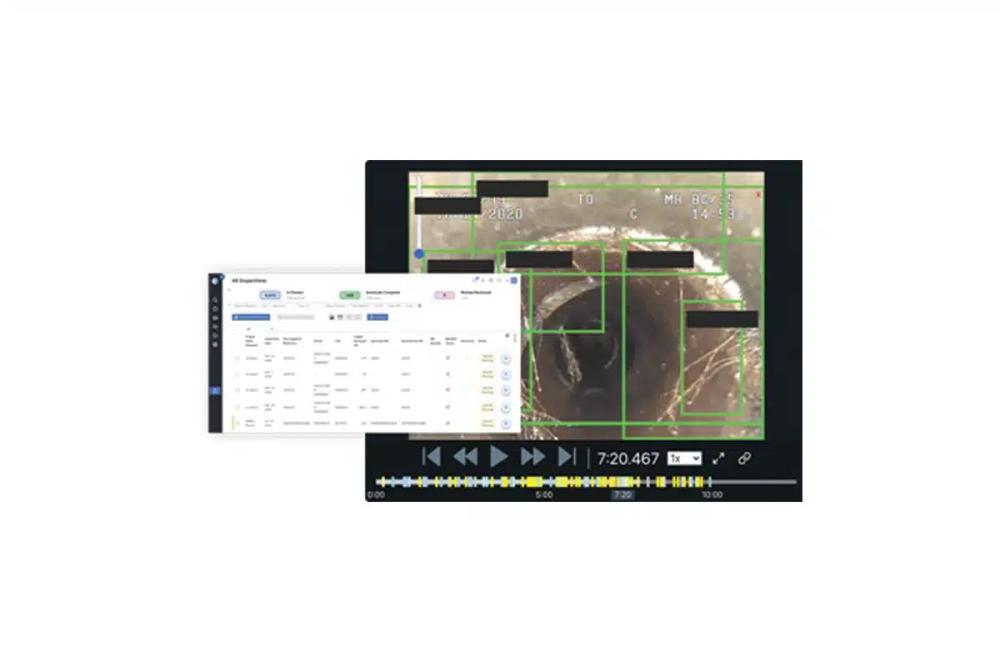
The following article, written by Samantha Pierce and Eric Sullivan of SewerAI, was originally published in Trenchless Technology magazine on November 27, 2024. It covers how the City of Phoenix partnered with engineering firm Dibble to evaluate AI-powered sewer assessment technology — and why SewerAI came out on top.
One of America's Largest Sewer Systems
The City of Phoenix, Arizona, operates one of the largest sewer infrastructure systems in the United States — 5,114 miles of sanitary sewer pipes and more than 101,000 manhole structures. After rapid population growth over the last century, the city's trenchless sewer rehabilitation program has evolved significantly since it launched in the 1990s.
The program's budget reflects that growth. What started as $500,000–$2 million annually has climbed steadily: by the 2000s, annual investment reached $6–7 million, and the 2024–2025 budget has escalated to $33 million. For more than 20 years, the City has worked alongside Dibble, a multidisciplinary civil engineering firm specializing in trenchless solutions.
Despite the growing investment, the scale of the challenge demanded a smarter approach. As Steven Siroky, utilities senior project manager at Dibble, explained:
"The program specifically addressed older infrastructure in combination with Collections Frequently Visited Areas (FVA). Unfortunately, due to extensive population growth in the 1960s, following the rehabilitation protocol for older pipes was insufficient. Even at its escalated pace, the program would take more than 20 years to update the work installed during that era. Rehabilitation would need to be selective. Thus, the assessment had to be thorough and efficient."
The Limitations of Traditional Sewer Assessment
Traditional sewer assessment relies on conventional CCTV inspection methods, which can be expensive and inefficient. Manual data entry onsite introduces significant downtime, inconsistent quality, and unwieldy file sizes for inspection videos — making data management cumbersome and sometimes unreliable.
For a city the size of Phoenix, these inefficiencies compound quickly. The City and Dibble recognized that a new approach was needed — one that could deliver the thoroughness and efficiency required to make selective rehabilitation decisions at scale.
Introducing Automated Defect Recognition (ADR)
The City and Dibble opted to evaluate new technologies through a structured pilot program, focusing on the emerging field of computer vision AI tools that automatically identify defects and features in CCTV data — known as automated defect recognition (ADR).
ADR technology utilizes supervised computer vision deep learning to automate the identification of potential defects in sewer pipes by analyzing each image from CCTV inspection videos. NASSCO-certified technicians then review AI outputs before they are finalized into survey reports and pipe ratings — combining the speed of AI with the accuracy of expert human review.
The Pilot: Evaluating Five AI Vendors
The pilot program ran in 2022–2023, during which five AI vendors from around the world were evaluated using a sample set of 30 pipe CCTV videos covering 1.7 miles of pipe. Vendors were assessed across four key criteria:
- NASSCO PACP defect coding accuracy
- Cost efficiency
- Software platform features
- Quality of deliverables
SewerAI emerged as the top performer — achieving the highest overall accuracy score and the lowest overall net cost per linear foot among all five vendors evaluated.
Expanding to 107 Miles of Sewer Pipe
Following the successful pilot, the City expanded the AI-based sewer assessment program to cover 107 miles of small-diameter sewer pipes. Three separate CCTV contractors collected data in the field and uploaded it directly to SewerAI's PIONEER cloud-based platform for processing, review, and collaboration.
SewerAI, founded in 2019, has been delivering similar projects across North America for several years, with a track record of managing over 30,000 miles of mainline and lateral pipe data. The PIONEER platform enabled seamless coordination between multiple field contractors and the City's engineering team — centralizing data management and quality review in a single cloud environment.
Benefits and Impact
The program enabled Phoenix to optimize its rehabilitation planning by providing more accurate and consistent data on the condition of its sewer pipes. AI streamlined the data management process, allowing for seamless integration with existing infrastructure and systems.
Siroky described the operational impact:
"With the implementation of AI assessment, Dibble's goal is to systematically review and plan for selective rehabilitation quarter by quarter section. The cleaning and assessment areas are in concert with the City's already planned maintenance schedule, allowing both the city's crews and these contractors to assess the infrastructure, and significantly increase the effectiveness of the rehabilitation program."
Beyond the core assessment program, the project also unlocked several additional use cases:
- Warranty inspections for CIPP (cured-in-place pipe) installations
- Assessment of historical (legacy) CCTV data for benchmarking and deterioration analysis
- Computer vision tools for quality assurance inspection
Looking Ahead: 3D Manhole Modeling and Digital Twins
The City and Dibble also evaluated SewerAI's photogrammetry-based tools for generating 3D models and "digital twins" of sewer manholes through the Sewer3D product. This technology enables cost-effective NASSCO MACP assessments using affordable 360-degree action cameras, and Phoenix has plans to incorporate it into its rehabilitation program starting in 2025.
The Future of Proactive Infrastructure Management
Adopting AI technologies has opened new possibilities for proactive infrastructure management. The ability to quickly and accurately assess the condition of sewer pipes allows for more informed decision-making — enabling Phoenix and other cities to prioritize rehabilitation efforts and extend the remaining useful life of their sewer systems.
Phoenix's experience demonstrates that AI-powered sewer assessment is no longer a future concept — it's a proven, scalable solution delivering measurable results for one of America's most complex urban infrastructure systems.
Read the original article in Trenchless Technology magazine: Using AI for Sewer Assessments in Phoenix.
STAY AHEAD OF THE FLOW
Get SewerAI updates, product news, and practical guidance for modern sewer inspection programs.