WWETT Show 2025: AI Innovations Are Improving Wastewater Pipe Management
Waste360 covers SewerAI Director of Strategic Development Eric Sullivan's panel at the WWETT Show 2025, where he and Scott Thayler of Edge AI Solutions discussed how AI is transforming wastewater pipe inspection and asset management.
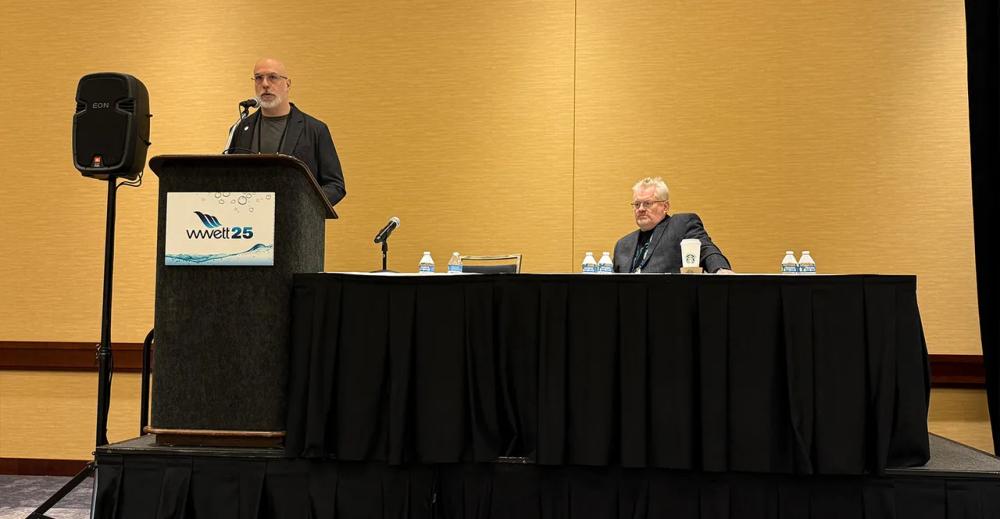
At the WWETT Show 2025, two industry leaders took the stage to explore how artificial intelligence is reshaping the way the wastewater sector inspects pipes and manages critical infrastructure. Eric Sullivan, Director of Strategic Development at SewerAI, and Scott Thayler, Ph.D., Chief Technology Officer at Edge AI Solutions, Inc., shared insights on the growing role of AI in an industry facing mounting pressure from aging systems and a changing climate.
The panel, covered by Waste360 writer Gage Edwards, highlighted both the urgency of the problem and the promise of technology-driven solutions.
A System Under Strain
America's sewer infrastructure is in a state of crisis. Every year, 860 billion gallons of sewage overflow, polluting rivers, lakes, and coastal waters across the country. The U.S. spends $60 billion annually on wastewater management — and that figure is only expected to grow as climate change accelerates pipe deterioration and aging infrastructure continues to fail at alarming rates.
Traditional sewer inspections have long relied on manual assessment processes — a method prone to delays, human error, and operational inefficiencies. As the scale of the problem grows, the industry is turning to AI to close the gap.
How AI Is Transforming Pipe Inspection
Sullivan and Thayler outlined three key areas where AI is delivering measurable improvements in wastewater pipe management:
1. Accuracy
AI-powered software automates defect detection by analyzing CCTV video footage of pipe interiors. Specialized AI models can identify cracks, root intrusions, and pipe collapses with up to 97% accuracy — dramatically reducing the human error that has historically plagued manual review processes. The result is more reliable surveys and better-informed maintenance decisions.
2. Cost
Traditional CCTV inspection trucks can cost upwards of $700,000 — a significant barrier for many municipalities and contractors. AI-enabled robotic inspection systems offer a compelling alternative: contractors can lease inspection robots for a fraction of that price, benefiting from lower upfront costs, predictable maintenance expenses, minimized downtime, and access to continuous hardware upgrades without the burden of capital ownership.
3. Cloud-Based Computing
AI-powered cloud-based solutions are fundamentally changing how inspection data is stored, accessed, and shared. Real-time data streaming enables seamless collaboration between field operators and municipal planners, while cloud storage eliminates the reliance on physical hard drives that can be lost, damaged, or siloed. Faster reporting and automated approvals also reduce the time required to process inspection results — accelerating the path from data collection to action.
AI Augments Workers — It Doesn't Replace Them
One of the most important points emphasized during the panel: AI is not coming for workers' jobs. Sullivan and Thayler were clear that the future of wastewater inspection is one where skilled professionals use AI as a tool to enhance their workflows, conduct more accurate inspections, and make better decisions — not one where technology sidelines the human expertise that the industry depends on.
As AI continues to mature, its role in wastewater management will only deepen — helping utilities and contractors do more with less, respond faster to infrastructure failures, and ultimately protect public health and the environment.
Read the full article on Waste360.
STAY AHEAD OF THE FLOW
Get SewerAI updates, product news, and practical guidance for modern sewer inspection programs.