Accuracy & Project Cost Comparison for Photogrammetry-Based Manhole Inspections
SewerAI presents findings from a WEF Collections study comparing the accuracy and project cost of photogrammetry-based manhole inspections using Sewer3D technology versus traditional NASSCO MACP inspection methods.
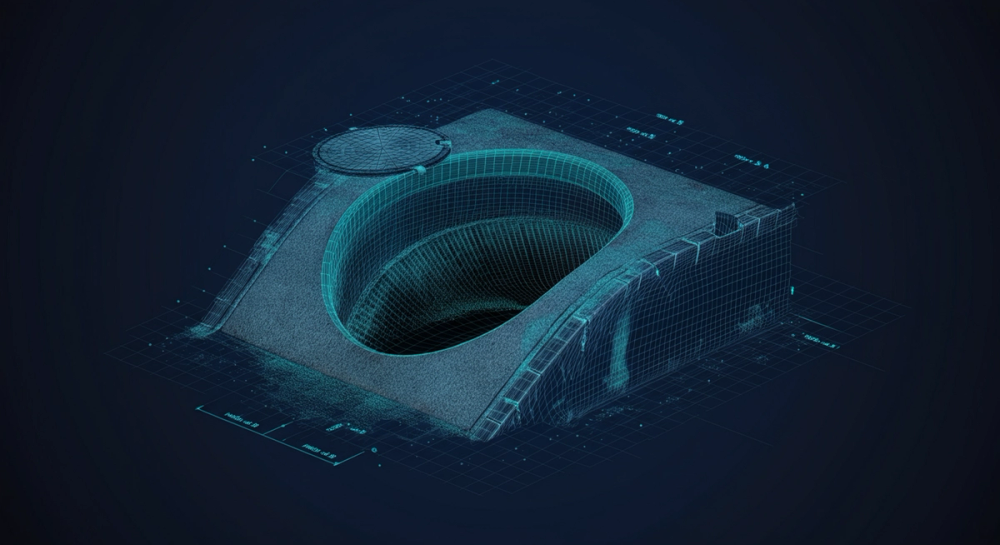
In April 2024, SewerAI presented a landmark study at the Water Environment Federation (WEF) Collections conference titled "Accuracy & Project Cost Comparison for Photogrammetry-Based Manhole Inspections." The study offers a rigorous, data-driven comparison between SewerAI's innovative Sewer3D photogrammetry platform and the traditional NASSCO MACP (Manhole Assessment Certification Program) inspection methodology — and the results have significant implications for municipalities and utilities managing aging sewer infrastructure.
What Is Photogrammetry-Based Manhole Inspection?
Photogrammetry-based manhole inspection is a modern approach to sewer asset assessment that leverages affordable 360-degree action cameras to capture comprehensive imagery of manhole structures. That imagery is then processed using photogrammetry algorithms to generate detailed 3D models — or "digital twins" — of each manhole.
SewerAI's Sewer3D platform is purpose-built around this workflow. Rather than relying on expensive, specialized equipment or highly trained field crews, Sewer3D enables inspection teams to capture high-quality manhole data quickly and cost-effectively. The resulting 3D models are then analyzed by SewerAI's AI-powered platform to produce NASSCO MACP-compliant condition assessments — the same industry-standard grading system used in traditional inspections.
This approach democratizes comprehensive manhole inspection, making it accessible to agencies of all sizes without sacrificing data quality or regulatory compliance.
Accuracy Comparison: Sewer3D vs. Traditional NASSCO MACP
A central question for any new inspection technology is whether it can match — or exceed — the accuracy of established methods. The WEF Collections study directly addresses this by evaluating how photogrammetry-based assessments compare to traditional NASSCO MACP inspections across key performance metrics, including:
- Defect detection accuracy — the ability to correctly identify and classify structural and operational defects
- Data quality and completeness — the richness and reliability of the condition data captured
- NASSCO MACP compliance — whether the resulting assessments meet the industry-standard grading criteria
The study's findings demonstrate that Sewer3D's photogrammetry-based approach delivers defect detection accuracy and data quality that is highly comparable to traditional NASSCO MACP inspections. The 3D digital twin models generated by Sewer3D provide inspectors and engineers with a persistent, reviewable record of each manhole's condition — a capability that traditional field-based inspections cannot easily replicate.
Importantly, the photogrammetry-based workflow also reduces the subjectivity inherent in manual field inspections. By capturing objective, measurable 3D data, Sewer3D enables more consistent and repeatable assessments across different crews, locations, and time periods.
Project Cost Comparison: A Compelling Case for Cost Savings
Beyond accuracy, the study examines one of the most pressing concerns for municipal asset managers: cost. Traditional NASSCO MACP manhole inspections require specialized equipment, certified inspectors, and significant field time — all of which drive up the per-manhole cost of a comprehensive inspection program.
The WEF Collections study provides a direct project cost-per-manhole comparison between the two methods. The results show that Sewer3D's photogrammetry-based approach delivers significant cost savings compared to traditional inspection methods. By using affordable 360-degree cameras and streamlining the data capture workflow, agencies can inspect more manholes for the same budget — or achieve the same inspection coverage at a fraction of the cost.
This cost efficiency is particularly impactful for large-scale inspection programs, where the cumulative savings across thousands of manholes can free up significant capital for rehabilitation and repair work.
Implications for Municipalities and Utilities
The findings from this study carry meaningful implications for cities and utilities responsible for managing sewer infrastructure. Comprehensive manhole condition assessments are a critical component of any proactive asset management program — but budget constraints have historically limited the frequency and scale of these programs.
With Sewer3D, municipalities can now:
- Conduct comprehensive, NASSCO MACP-compliant manhole assessments at significantly lower cost
- Expand inspection coverage across their entire manhole inventory, rather than sampling a subset
- Build a permanent digital record of manhole conditions through 3D digital twins, enabling trend analysis over time
- Prioritize rehabilitation and repair investments based on accurate, data-driven condition scores
- Reduce the safety risks associated with confined-space entry during traditional inspections
Together, these capabilities enable a more proactive, cost-effective approach to sewer asset management — helping agencies extend the life of their infrastructure, reduce emergency repair costs, and better serve their communities.
Access the Full Study
The complete WEF Collections study — "Accuracy & Project Cost Comparison for Photogrammetry-Based Manhole Inspections" — is available for download. We encourage engineers, asset managers, and utility professionals to review the full findings and consider how photogrammetry-based inspection technology can benefit their programs.
📄 Download the full study (via Google Drive)
Source: WEF Collections, April 2024.
STAY AHEAD OF THE FLOW
Get SewerAI updates, product news, and practical guidance for modern sewer inspection programs.