How to Evaluate an AI Sewer Inspection Vendor
Every booth at WEFTEC says "AI." Some of it changes the work; some of it is a feature with a new label. Here are seven questions that tell the difference before you sign, from blind accuracy tests on your own footage to what support looks like on day 200.
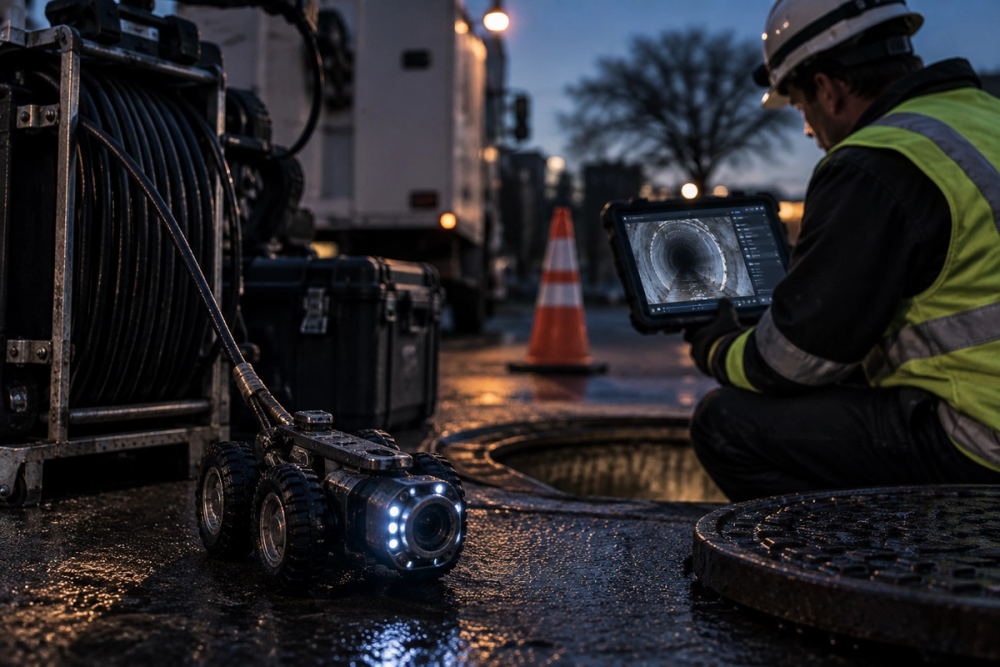
Walk the floor at WEFTEC this year and you'll hear the same two words at nearly every booth: artificial intelligence. Some of it is real and changes the work. Some of it is a feature with a new label. The hard part for a buyer isn't finding AI. It's telling the difference before you sign.
Here is how to evaluate an AI inspection vendor so the demo doesn't decide for you. None of this requires you to be a data scientist. It requires you to ask the questions a vendor confident in their product will welcome.
Make them prove accuracy on your pipe, not their reel
Every vendor's demo footage looks great, because they chose it. The only accuracy number that matters is the one measured on your system, with your conditions, your pipe materials, your debris. Ask for a blind test: hand over a sample of footage your team has already coded, and compare. A vendor who's sure of their accuracy will say yes. A vendor who deflects to case studies and averages is telling you something.
Ask what "AI" actually means in their product
"AI-powered" covers a lot of ground. Does it code every defect automatically, or does it suggest codes a human still has to confirm one by one? Is there a human-in-the-loop step, and if so, where? There's no single right answer, but you need to know exactly what the machine does and what your team still has to do, because that determines whether you actually save time or just move the work around.
Look past the inspection to the whole workflow
The inspection is the start of the job, not the end of it. Ask what happens to the data after it's coded. Does it flow into risk scoring, project planning, and reporting, or does it stop at a coded file you then have to move into three other systems by hand? A point tool that only codes footage can leave you with the same data-reconciliation problem you started with. The value is in the connected path from inspection to a defensible plan.
Test consistency at volume, not on one clip
Accuracy on a single clean clip is easy. Consistency across fifty thousand feet is the real test, because that's where manual processes drift and where a good AI system earns its keep. Ask how the system performs across large volumes and multiple crews or contractors. The whole point of automation is that the ten-thousandth foot is coded the same way as the first.
Ask how it handles QA
Coding is only half the job. How does the vendor verify the coding? Can their QA actually check every foot, or does it sample like a manual process? A system that can validate the full dataset, and flag only the exceptions for a human, is fundamentally different from one that just speeds up the first pass and leaves you with the same review bottleneck.
Check who the product is built for
This one is easy to skip and important not to. The best platforms serve utilities, contractors, and engineering firms on the same data, because that's how the work actually flows. Be wary of any tool whose pitch depends on cutting one of those players out. Real efficiency removes the bottleneck, not the partner. A vendor who frames their value as replacing your contractors or your engineers is selling you a fight, not a workflow.
Evaluate the company, not just the software
You're not buying a feature. You're buying a multi-year relationship with whoever has to support your program when the field conditions get strange and the deadline is real. Ask who built the company and whether they've done this work. Ask what support looks like on day 200, not day 1. The tool will keep changing. The question is whether the people behind it understand the job you're actually doing.
The test underneath all of these
Every question above is really one question asked seven ways: does this make my people more capable, or does it just look impressive in a booth? The right vendor gives your inspectors, engineers, and crews more reach and more confidence. The wrong one gives you a demo you can't reproduce on your own pipe. Evaluate for the first, and the floor at WEFTEC gets a lot easier to walk.
See what the questions above look like answered. Bring a sample of your own footage and we'll run it.
Book a demo (or stop by and see it live at WEFTEC)


STAY AHEAD OF THE FLOW
Get SewerAI updates, product news, and practical guidance for modern sewer inspection programs.