From Cleaning Truck to Inspection Truck
The City of Mesa, Arizona runs 1,850 miles of sewer and 35,000 manholes. By mounting a GoPro skid on the recycler truck and letting AutoCode handle the PACP coding, the collections team turned cleaning and inspection into a single pass, gave camera operators back a day a week, and now assesses about 25% more pipe a year.
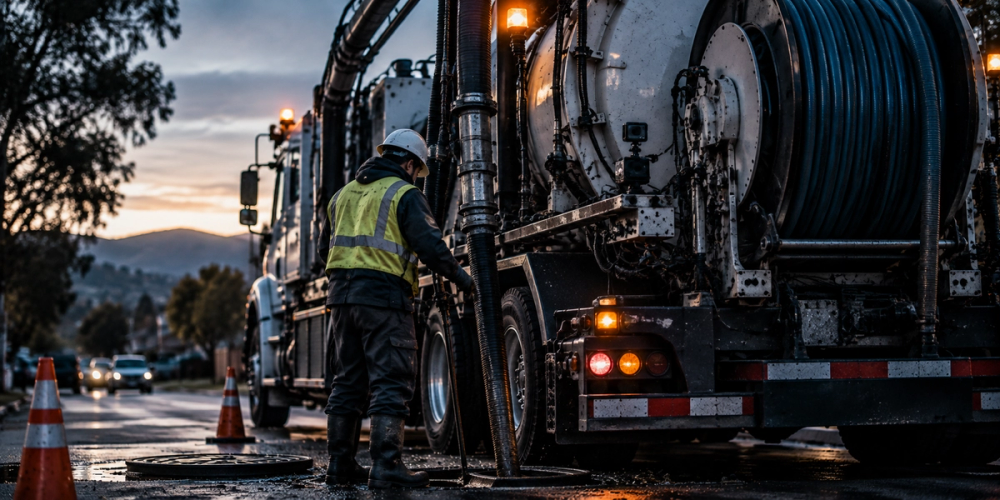
Every collection system has one truck that sees more pipe than any other. For the City of Mesa, Arizona, it's the recycler truck, working through 1,850 miles of sewer one line at a time. For most utilities, that truck's job ends when the line is clean. Inspection comes later, on a separate pass, in a CCTV van moving at camera speed.
This team had a second drag on top of that. Camera operators coded their own footage to NASSCO PACP and MACP by hand, which cost each of them about a day a week at a workstation instead of on the truck.
Two passes down the same pipe was the real cost.
Where the time was going
Along with all that pipe, the utility's collections team keeps track of 35,000 manholes. Like most programs its size, it ran inspection the traditional way: shoot the pipe, then code it by hand.
That loop asked camera operators to be in two places at once. The people best at running the truck were also the people best at coding the footage, so every hour at a workstation was an hour off the truck.
Its contractors had already moved to AutoCode for the work they delivered to the utility. The coded data was solid, but it lived in the contractors' environment. The utility's own crews couldn't work the same way, and the two sets of footage never sat in one place.
What changed
The utility moved its in-house PACP coding to AutoCode in late 2024, with every inspection reviewed by a NASSCO-certified operator. The day a week went back to the field. The collections superintendent estimates crews now assess about 25% more pipe a year than before.
Then the team built something new. Working with SewerAI and an equipment vendor, they designed a skid that mounts a GoPro on the recycler truck. As the truck cleans a line, the GoPro records. The skid overlays GPS and truck telemetry on the footage, the video uploads to Pioneer, and AutoCode codes it like any other inspection. Cleaning and inspection became one pass, and the superintendent figures that single pass gives back about half the workday.
"They can clean pipe way faster than they can camera pipe. So we can get through our system faster and find issues and problems at a faster rate."
What it unlocked
The biggest change was the CCTV van's job. Before, it worked the system line by line, so the slowest truck in the fleet set the pace for condition assessment. Now the cleaning-pass footage does the first look across the system, and the van goes where that footage says a closer look is needed. The expensive equipment does the expensive work.
Manholes got the same treatment. Ahead of large inspection projects, crews pre-scan with the GoPro workflow, and AutoCode produces an MACP-coded baseline. Field crews average 500 Level II MACP inspections a month, and the time AutoCode freed up now goes to more fieldwork, including acoustic screening and GoPro inspections.
None of that sidelined anyone. When a contractor arrives, the baseline is already in the record, and their time goes to the structures that need their expertise. Contractors running AutoCode see the same shift on their side. And because they were already on the platform, their footage and the utility's now live in one record. The only thing that loses is the bottleneck.
Start with the truck you already run
Most utilities budget cleaning and inspection as separate programs, with separate trucks and separate schedules. This team's gains came from noticing that one truck was already covering the system and giving it a way to record what it saw.
Any superintendent can start with the same question: which truck already sees the most pipe, and what is it recording?
Read the full City of Mesa story. The equipment, the numbers, and how the workflow came together. Read the case study →
See where your passes are costing you. Book a walkthrough →
STAY AHEAD OF THE FLOW
Get SewerAI updates, product news, and practical guidance for modern sewer inspection programs.